
1972: The Socialist Constitution and the Presidency
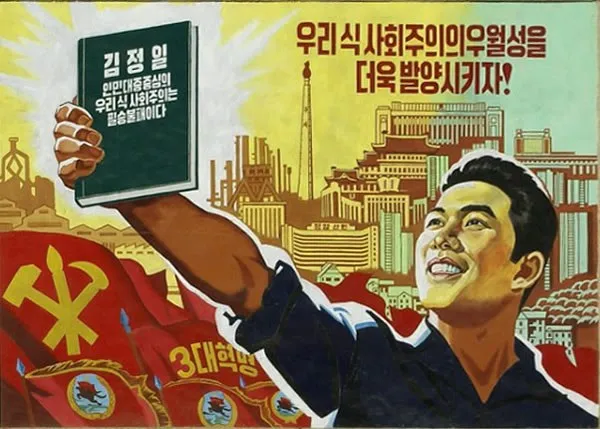
The 1972 Socialist Constitution marked a decisive ideological and institutional break from the 1948 framework, formally proclaiming the Democratic People’s Republic of Korea an “independent socialist state representing the interests of all the Korean people” and grounding state authority in the dictatorship of the proletariat through a “creative application of Marxism–Leninism” to North Korean conditions. The constitution elevated the status of the Korean Workers’ Party by embedding its leadership role within the constitutional order and enshrined democratic centralism as the governing principle of all state organs, establishing a strict hierarchical system with no checks and balances. While the Supreme People’s Assembly (SPA) remained the supreme sovereign organ in formal terms, real power was concentrated in the newly created presidency—a single head-of-state position with a four-year term and no re-election limits—into which the SPA immediately elected Kim Il-sung. The institutional overhaul extended to the creation of the Central People’s Committee (CPC), chaired by the President, and the renaming of the Cabinet as the Administrative Council, which became a policy-implementation body subordinate to the President and the CPC, thereby centralizing executive authority well beyond the Soviet model.
Equally transformative were the changes to citizens’ rights and economic organization. The constitution replaced earlier quasi-liberal guarantees with a collectivist conception of rights and duties, rooted in the principle of “one for all and all for one,” and constitutionally embedded the “mass line” and “mass movements.” Collectivism became the guiding principle of education at all levels. Private ownership of the means of production was abolished, along with individuals’ rights to operate private businesses, while private property was limited to personal-use goods only. Because the state assumed responsibility for providing daily necessities through a rationing and public distribution system, taxation was eliminated. At the same time, the constitution inserted a peaceful reunification clause addressing North–South relations, even as it reaffirmed the ultimate goal of fully realized socialism.
The process of adoption itself underscored the constitution’s political purpose. By the early 1970s, Kim Il-sung had completed a “grand consolidation” of power—surviving the Korean War, purging rival factions, and mobilizing society through the Chollima movement—rendering his continued role as Soviet-style Premier increasingly anachronistic. A Workers’ Party–controlled drafting committee was convened to produce a distinctly “made-in-Korea” constitutional order, and at the Fifth Party Congress (1970) the leadership declared the socialist system fully established, characterizing the 1948 Constitution as an obsolete relic of a transitional democratic phase. At the first session of the Fifth SPA in December 1972, following Kim’s programmatic speech, “Let Us Further Strengthen the Socialist System of Our Country,” the new constitution was unanimously adopted, and Kim Il-sung was immediately elected to the new office of President (Jusok). Beyond concentrating authority, the 1972 Constitution symbolized a broader assertion of sovereignty: it formally designated Pyongyang as the capital, replacing the earlier claim to Seoul and signaling the DPRK’s permanent self-definition as a separate, fully sovereign, and increasingly Juche-oriented state.