
1992: The Succession Amendment
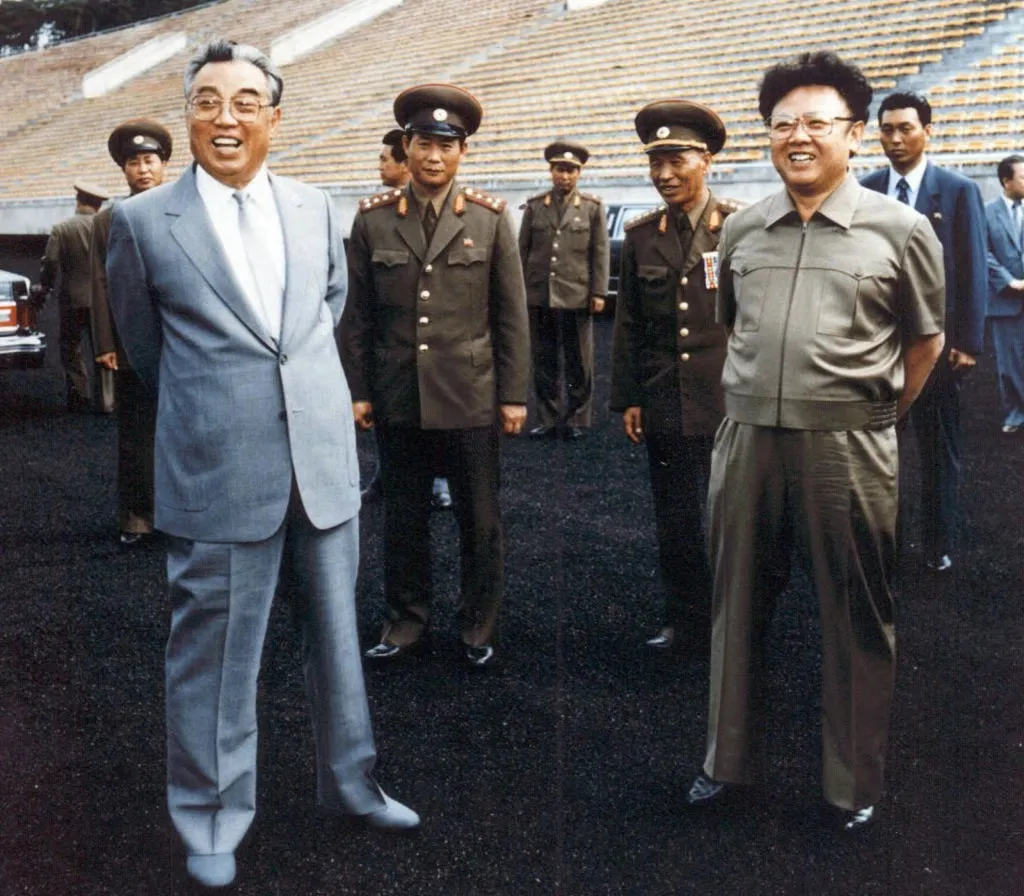
The 1992 Amendment was a pivotal "bridge" revision. While the 1972 Constitution established Kim Il-sung's absolute power, the 1992 update was engineered to solve the most delicate problem in a revolutionary state: hereditary succession.
By the early 90s, the Soviet Union had collapsed and Kim Il-sung was aging. This amendment provided the legal mechanics to transition power to his son, Kim Jong-il, while distancing the DPRK from its failing global communist peers.
Key Shifts in the 1992 Amendment:
- The Rise of the NDC: This is the most critical legal change. The National Defense Commission (NDC) was separated from the Central People's Committee and elevated to an independent, higher status. Kim Jong-il was appointed Chairman of the NDC, giving him legal control over the military—the most powerful institution in the country—without needing to take the Presidency from his father.
- Ideological Divorce: The amendment significantly downplayed "Marxism-Leninism," elevating Juche to a standalone, supreme state ideology. This signaled that North Korea would not follow the path of the USSR; it would survive by focusing on its own nationalist "Self-Reliance."
- Economic "Openness": Following the 1984 Foreign Investment Law, the 1992 revision added Article 37, which encouraged joint ventures with foreign corporations. This was a desperate legal attempt to fix a stagnating economy by opening "Special Economic Zones" like Rajin-Sonbong.
- The "Commander-in-Chief" Title: The constitution was changed to allow someone other than the President to be the Supreme Commander of the Armed Forces. This legalized Kim Jong-il’s total military authority while his father was still alive.