
History and Military Analysis
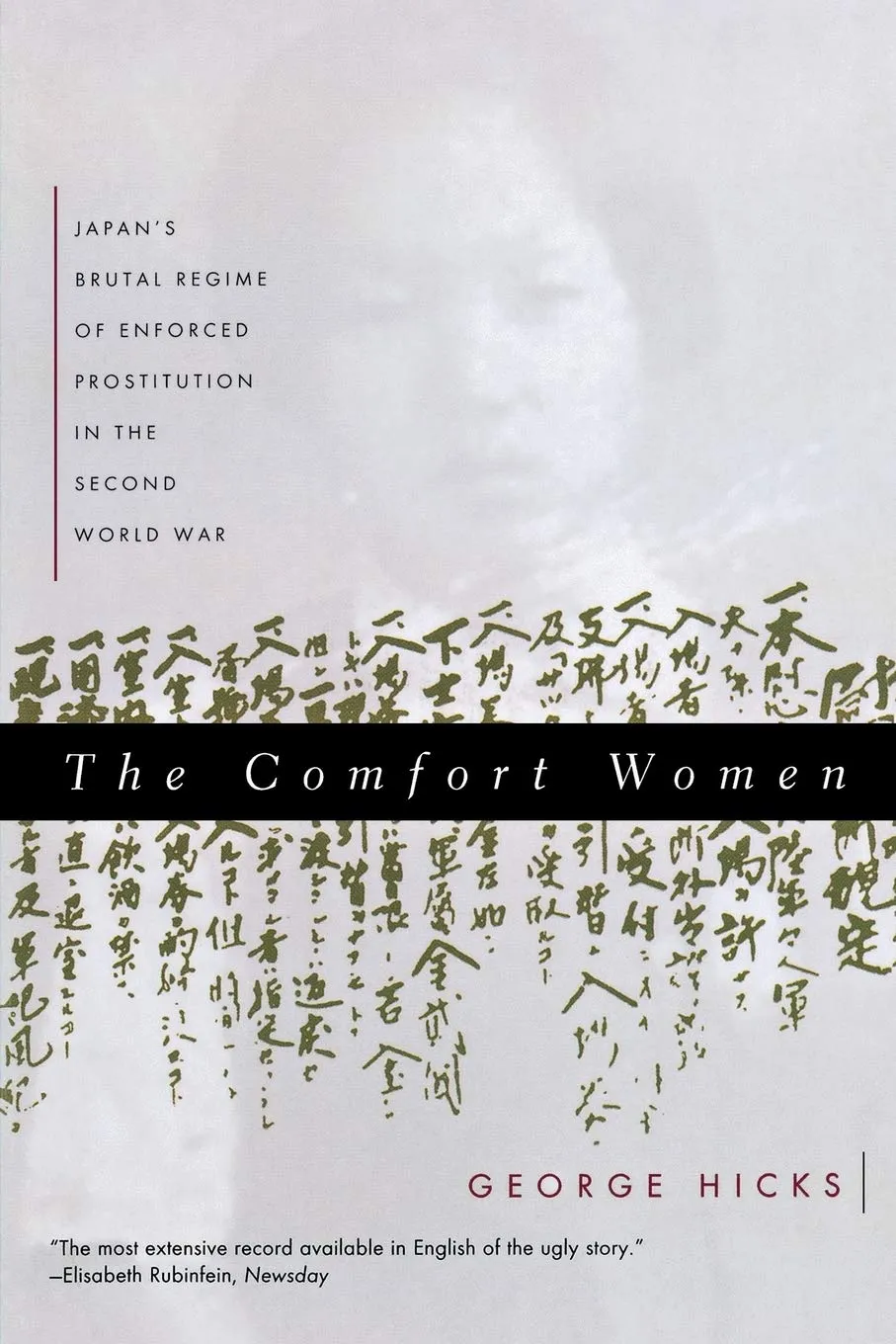
Hicks, George. The Comfort Women: Japan's Brutal Regime of Enforced Prostitution in the Second World War. New York: W.W. Norton & Company, 1995.
As one of the first major English-language books on the subject, Hicks’ work was instrumental in introducing the Western world to the scale of the comfort women system. He provides a broad historical overview, tracing the system's development from the 1930s through the end of the war. While some of the numbers and specific details have been refined by later archival research, this remains a foundational text for understanding how the military transitioned from private "brothels" to a state-managed system of sexual slavery.
Hicks, George. "The Comfort Women." In The Japanese Wartime Empire, 1931-1945, edited by Peter Duus, Ramon H. Myers, and Mark R. Peattie. Princeton, N.J.: Princeton University Press, 1996.
Published in a definitive volume on the logistics and administration of the Japanese Empire, this chapter situates the "comfort women" system within the broader framework of Imperial Japan's wartime mobilization. Hicks argues that the establishment of comfort stations was a calculated military policy, integrated into the hierarchy of the Imperial Army to maintain troop morale and manage "hygiene." By placing the issue in this specific academic context, the text demonstrates that sexual slavery was not a byproduct of chaotic combat, but a structured administrative project of the state
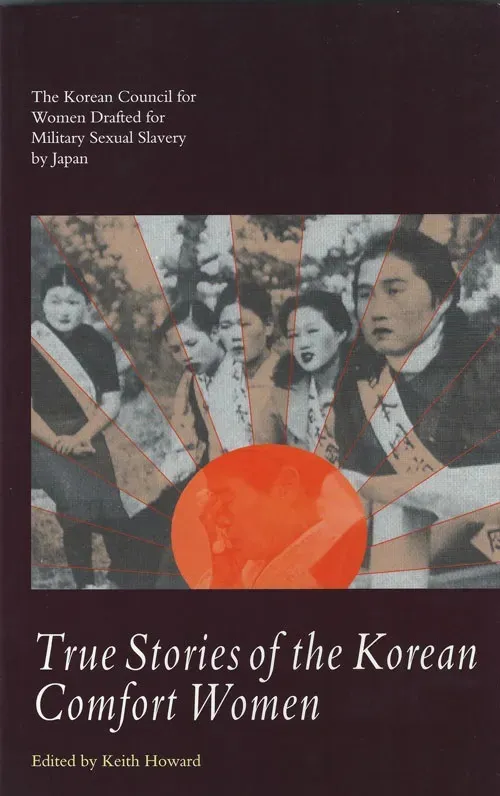
Howard, Keith, ed. True Stories of the Korean Comfort Women. London: Cassell, 1995.
This volume serves as both a historical record and a collection of testimonies. It is significant for providing the historical context of the Japanese occupation of Korea and explaining the socio-economic conditions that allowed for the recruitment (through force, fraud, or coercion) of Korean women. Howard’s scholarly framing helps readers understand the specific colonial dynamics that made Korean women the primary targets of the military's "recruitment" efforts.
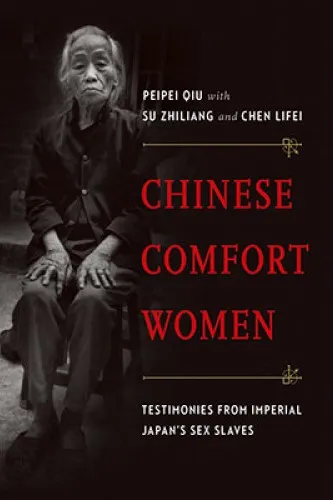
Qiu, Peipei, with Chen Lifei and Su Zhiliang. Chinese Comfort Women: Testimonies from Imperial Japan's Sexual-Slavery System. Oxford: Oxford University Press, 2013.
This is the definitive historical account of the "comfort women" in China. It is a crucial addition to the bibliography because it documents how the system operated in occupied Chinese territories, where women were often held in "garrison-style" stations directly on the front lines. The authors use archival documents and survivor testimonies to prove that the system was a standardized military policy across all occupied zones, not just an isolated occurrence
Stetz, Margaret and Bonnie B.C. Oh, eds. Legacies of the Comfort Women of World War II. Armonk, NY: M.E. Sharpe, 2001.
This collection of essays provides a multidisciplinary historical perspective, focusing on the long-term consequences of the military's actions. It is particularly useful for its analysis of the "omission" of the comfort women from the Tokyo War Crimes Tribunals. The historians in this volume argue that the failure to prosecute these crimes in 1946 directly led to the decades of silence and the current diplomatic "history wars."
Tanaka, Yuki. Hidden Horrors: Japanese War Crimes in World War II. Boulder, CO: Westview Press, 1996.
Tanaka, a prominent historian of Japanese war crimes, places the comfort women system within the broader context of military atrocities, including the Bataan Death March and the use of biological weapons. He explores the "psychology of the perpetrator," analyzing why the Japanese military leadership viewed the establishment of comfort stations as a "rational" military necessity to prevent mass rape and the spread of venereal disease among troops.
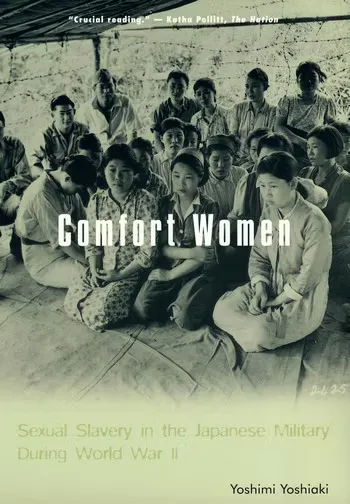
Yoshimi, Yoshiaki. Comfort Women: Sexual Slavery in the Japanese Military during World War II. Translated by Suzanne O'Brien. New York: Columbia University Press, 2000.
In 1992, Yoshimi discovered the "smoking gun" documents in the Japanese Defense Agency archives that proved the Imperial Army’s direct involvement in establishing and managing the comfort stations. His book presents an undeniable archival case against the claim that the system was run by private contractors. It is the essential starting point for any serious historical or legal researcher. This is arguably the most important book in the entire field.