
Politics, Memory and Reparations
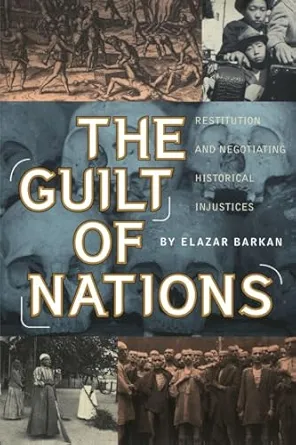
Barkan, Elazar. "Sex Slaves: Comfort Women and Japanese Guilt." In The Guilt of Nations: Restitution and Negotiating Historical Injustices. New York: W.W. Norton & Company, 2000.
Elazar Barkan, a leading scholar on restitution, uses the "comfort women" case to explore the complexities of negotiating guilt between nations. He analyzes how the Japanese government has attempted to navigate the line between "moral responsibility" and "legal liability." Barkan argues that the refusal to offer unambiguous state reparations undermines the efficacy of their apologies, framing the issue as a case study in how nations fail to achieve reconciliation when financial restitution is divorced from truth-telling.
Brooks, Roy L. When Sorry Isn’t Enough: The Controversy over Apologies and Reparations for Human Injustice. New York: New York University Press, 1999.
This anthology places the "comfort women" issue within a global context of redress movements, comparing it to Holocaust restitution and U.S. slavery reparations. Brooks provides a legal and theoretical framework for understanding why "apologies" often fail to satisfy victims. The chapters specifically addressing the Asian context highlight the cultural and political barriers that have prevented Japan from engaging in the "atonement model" of justice seen in post-war Germany.
Dudden, Alexis. Troubled Apologies – Among Japan, Korea and the United States. New York: Columbia University Press, 2008.
Historian Alexis Dudden analyzes the political utility of the "apology" in international relations. She argues that the Japanese government has used vague or retracted apologies not to atone for the past, but to manage its present-day image and alliances (particularly with the US). The book documents how these "rituals of apology" often backfire, fueling Korean nationalism and deepening the rift between the two nations rather than bridging it.
Hyun, Dae-song. The Historical Perceptions of Korea and Japan: Its Origins and Points of the Issues Concerning Dokdo-Takeshima, Yasukuni Shrine, Comfort Women, and Textbooks. Gyoha-eup Kyeonggi-do, Korea: Nanam, 2008.
This comprehensive overview links the "comfort women" issue to the other three pillars of the Japan-Korea diplomatic dispute: the Dokdo/Takeshima territorial dispute, the Yasukuni Shrine visits, and the history textbook controversies. Hyun provides the necessary geopolitical context to understand why the "comfort women" issue is so difficult to resolve—it is not an isolated human rights issue, but part of a larger, interlocked battle over sovereignty and national pride.
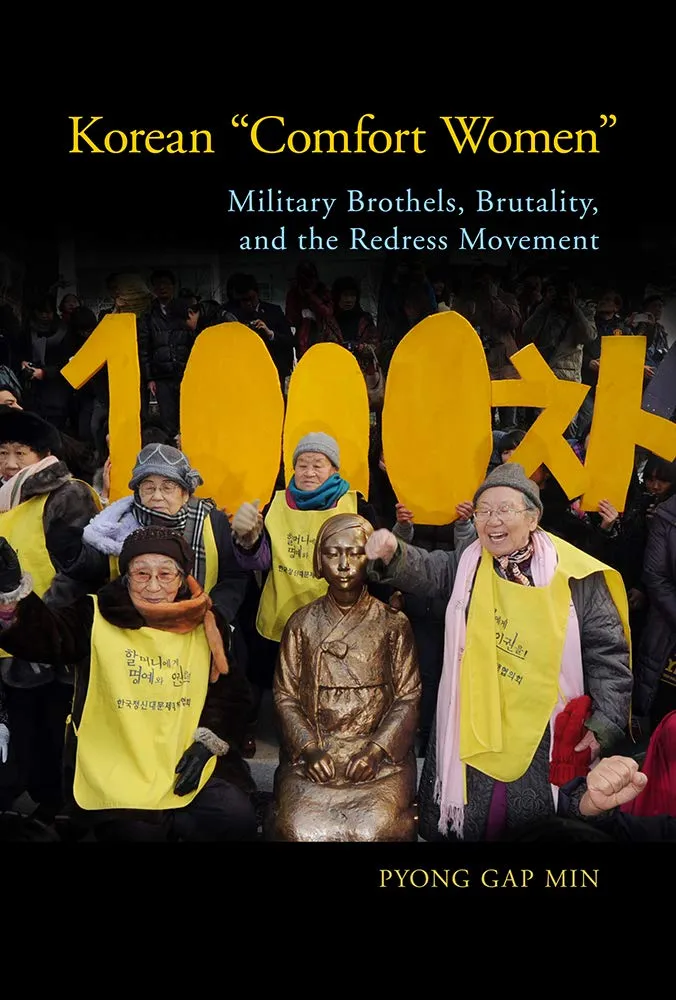
Min, Pyong Gap. Korean "Comfort Women": Military Brothels, Brutality, and the Redress Movement. New Brunswick, N.J.: Rutgers University Press, 2021.
Pyong Gap Min, a distinguished sociologist, provides one of the most thorough accounts of the redress movement itself. He documents how a small group of feminist activists and survivors built a global movement from the ground up. This book is essential for understanding the internal dynamics of the Korean Council (the main advocacy group), the role of the "Wednesday Demonstrations," and the sociology of social movements in East Asia.
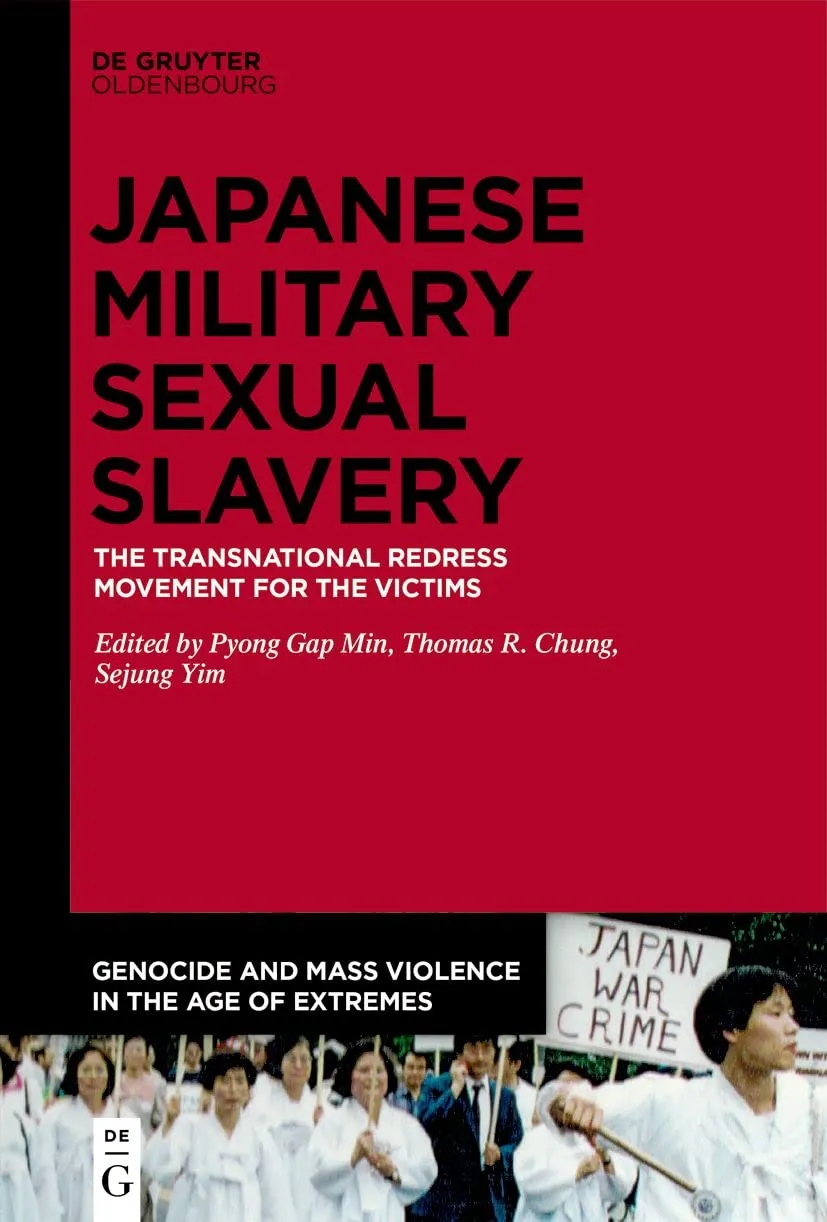
Min, Pyong Gap, Thomas Chung and Sejung Sage Yim, eds. The Transnational Redress Movement for the Victims of Japanese Military Sexual Slavery. Germany: De Gruyter Oldenbourg, 2020.
This edited volume expands on Min’s work by looking at the transnational nature of the movement. It includes chapters on how activists in the US, Europe, and other parts of Asia coordinated their efforts to pressure the Japanese government. It is particularly useful for researchers interested in how local human rights issues become globalized through diaspora communities and international organizations.
Naoko, Kumagai. The Comfort Women: Historical, Political, Legal and Moral Perspectives. Translated by David Noble. Tokyo: International House of Japan: 2016.
Written by a Japanese scholar who seeks a middle ground, this book attempts to disentangle the messy web of history, law, and morality. Kumagai carefully examines the Asian Women's Fund (AWF), arguing that while it was legally flawed (being private rather than state-funded), it represented a sincere moral effort by many Japanese citizens. This text provides a nuanced "internal" critique of how the Japanese government mishandled the issue despite various attempts at resolution.
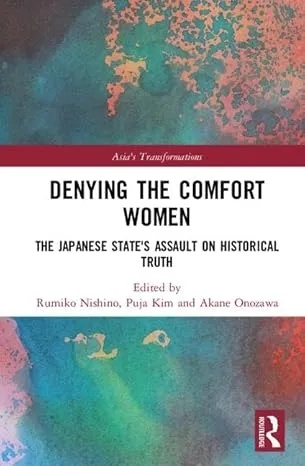
Nishino, Rumiko, Puja Kim and Akane Onozawa. Denying the Comfort Women: The Japanese State’s Assault on Historical Truth. Milton Park, Abington, U.K.: Routledge, 2018.
Rumiko Nishino is a veteran Japanese activist and researcher. This book is a direct counter-attack against the "revisionist" wave in Japan. It systematically debunks the arguments used by right-wing politicians and media to deny the coercive nature of the system. The book details the "assault on truth," including the attacks on the Asahi Shimbun newspaper and the pressure put on historians, serving as a chronicle of the contemporary battle for historical integrity within Japan.
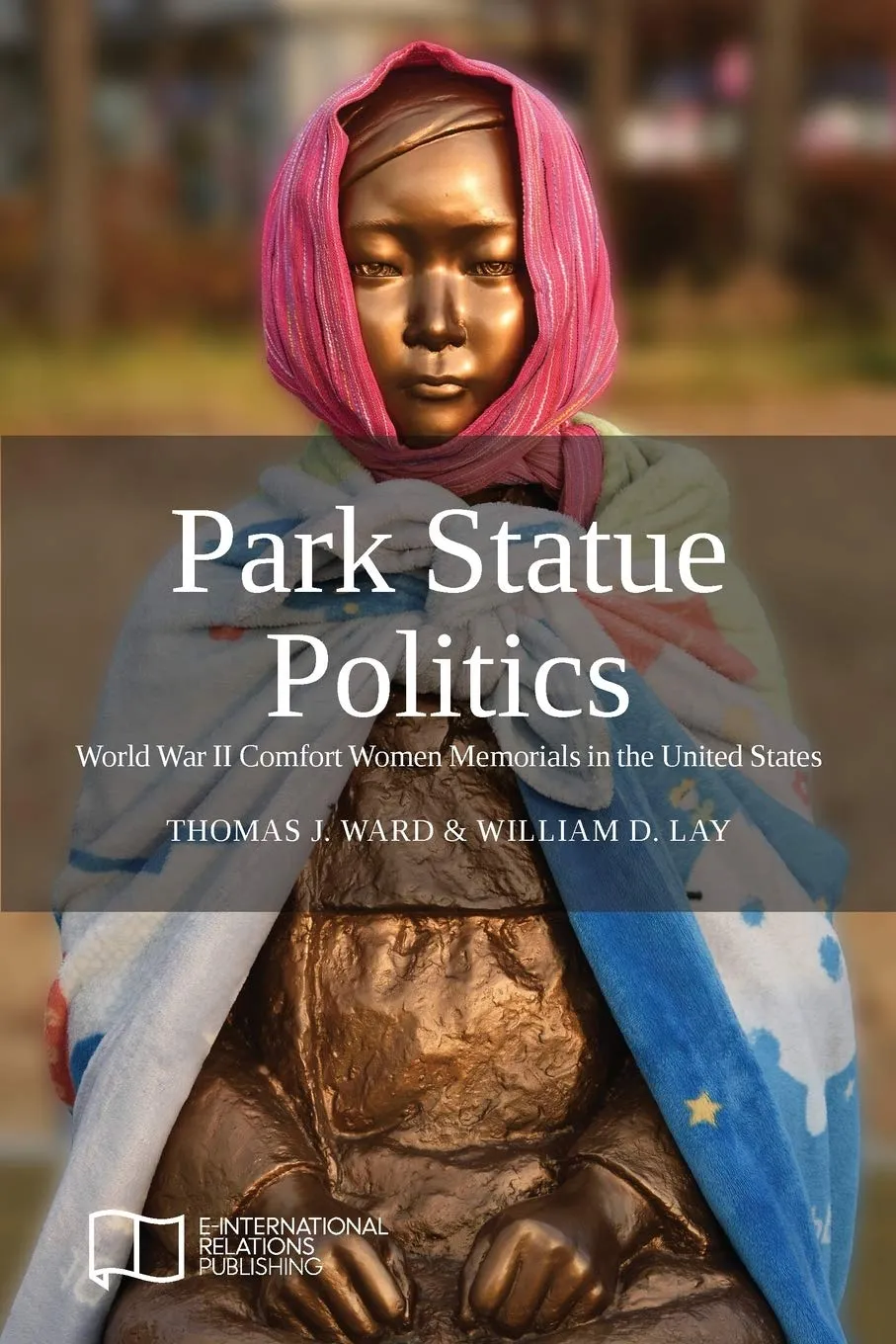
Ward, Thomas J. and William D. Lay. Park Statue Politics: World War II Comfort Women Memorials in the United States. U.K.: E-International Relations, 2019.
This unique study focuses on the "Statue Wars"—the diplomatic battles fought over the erection of "comfort women" memorials in American cities like Glendale, CA and San Francisco. Ward and Lay analyze how local municipal politics in the US became a proxy battlefield for international relations between Japan and Korea. The book explores the legal challenges brought by Japanese advocacy groups to remove the statues and the implications for free speech and memory in the public square.
Additional Reading:
Fisher, Barry A. "Yakusuni Shrine: Typhoon's Eye of Japan's Spiritual/Political Storm Rejecting Wartime Victim Redress." Unpublished presentation, 2007.
Untranslated Work:
Chong, Yong-hwan. Reconcilation for Whom? Comfort Women of the Empire as Invented History. Seoul: Purun Yoksa, 2016. [Korean]
Written by a Zainichi Korean historian, this book provides a rigorous academic rebuttal to Park Yu-ha’s controversial Comfort Women of the Empire. Chong critiques the "reconciliation" discourse, arguing that political attempts to "move on" often rely on distorting historical facts and erasing the coercive nature of the colonial military system. It is a key text for understanding the internal "history wars" within South Korean academia itself.